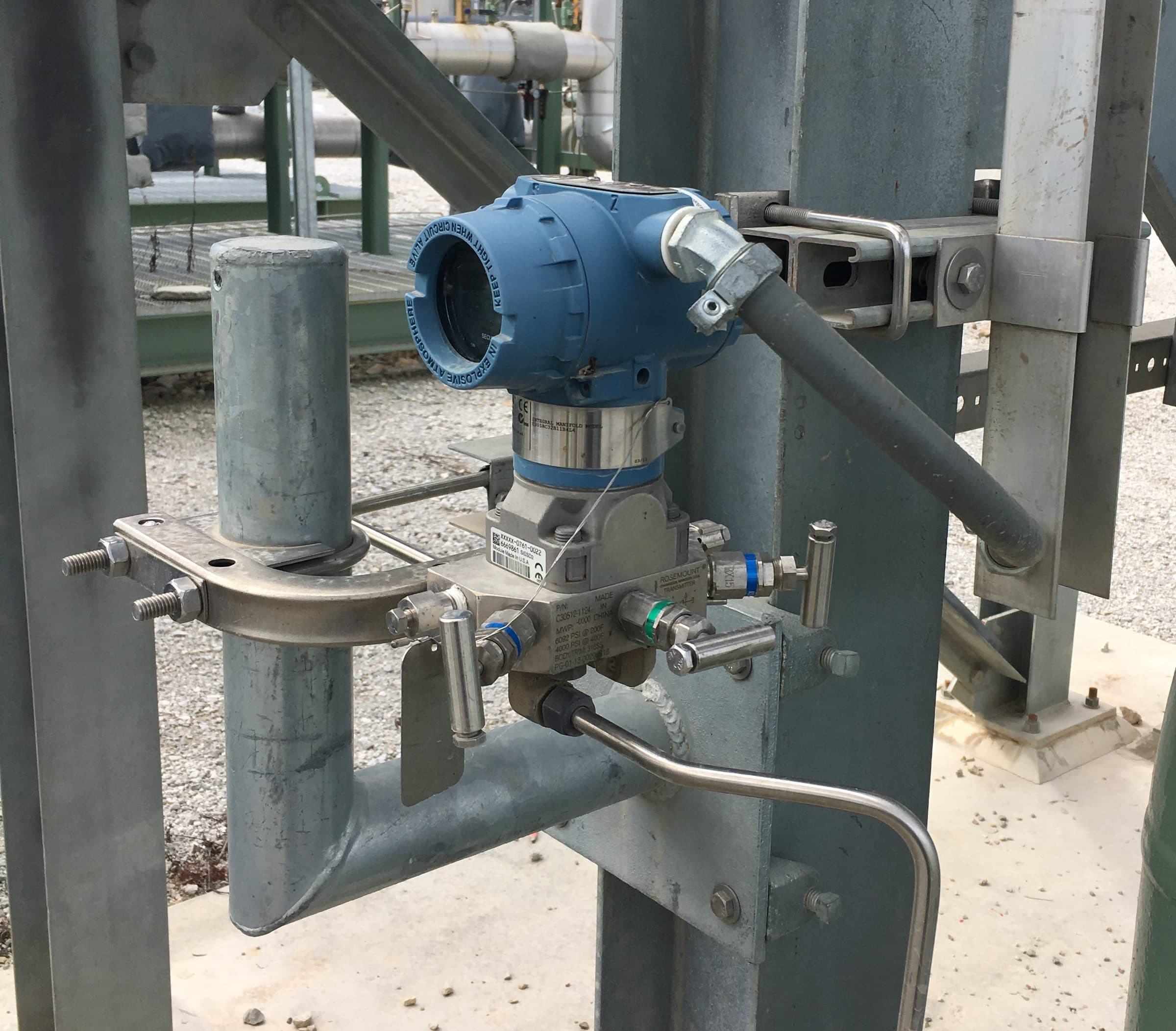
Mounting Field Instruments in Process Plants
Instrument stands, ModRack, and FixedRack — when to use each, how to select the right configuration, and how to specify for the process environment.
THE MOUNTING DECISION
Every instrument needs a mount. The mount decision affects maintenance for the life of the facility.
A pressure transmitter mounted on an undersized stand vibrates loose over time. A stand fabricated from the wrong material corrodes in coastal or chemical environments and loses structural integrity before the first turnaround. A rack system that can't be reconfigured forces expensive field modifications when the process changes.
Field instrument mounting is not a commodity decision. It is an engineering decision that affects the reliability of the measurement, the safety of the installation, and the maintainability of the instrument loop for the entire operating life of the facility.
TechLine Mfg. manufactures the complete range of instrument mounting hardware — from individual pipe mount stands for single transmitters to custom-welded FixedRack structures for large-scale permanent installations — with material options covering the full range of process plant environments.
DECISION FRAMEWORK
Instrument stand, ModRack, or FixedRack — how to choose.
The mounting decision depends on three factors: the number of instruments being mounted in one area, the permanence of the installation, and the level of customization required.
Single instrument — Instrument Stand
When one instrument needs to be mounted at a specific point — a pressure transmitter at a vessel nozzle, a temperature element at a pipe tap, a flow meter at a process connection — the instrument stand is the correct solution. TechLine manufactures instrument stands in every standard configuration:
- Pipe mount stands: Mount to 2" process pipe using U-bolt or pipe clamp. The most common configuration for transmitters mounted directly at the process connection.
- Floor mount stands: Bolt to concrete grade or structural steel deck. For instruments that are not pipe-mounted and need a freestanding support.
- Wall mount stands: Attach to structural steel, vessel walls, or concrete. For instruments in areas where floor mounting is impractical.
- Beam mount stands: Clamp to structural steel beams. For overhead or elevated instrument locations.
- Grating mount stands: Attach through open bar grating decks. Common in refinery and chemical plant elevated deck installations.
- Cable mount stands: Mount to cable tray structure. For instruments that are located adjacent to cable tray runs.
- U-bolt mount stands: For mounting to pipe rack structure or process piping of various diameters.
- Tech-Mount Modular: TechLine's modular stand system for custom configurations that don't fit standard options.
- Capillary spool and mounting flag: For remote seal transmitters where the capillary tube requires a controlled routing path from the process connection to the transmitter.
Material options: hot-dipped galvanized (standard), aluminum, 304 stainless steel, 316 stainless steel. Stock items in standard heights and configurations ship within 24 hours. Custom configurations available.
Multiple instruments in one area — ModRack
When three or more instruments need to be mounted in the same area — an analyzer shelter, an instrument air manifold station, a group of transmitters on a common process header — ModRack provides a configurable, off-the-shelf solution that consolidates multiple instruments onto a single support structure.
ModRack uses two 84" stanchions as the base unit, with adjustable receivers that accommodate single strut, double strut, and 2" square tubing crossbars. The number of receivers — and therefore the number of crossbar positions — is specified at order time. Roof options (no roof, double roof, single-sided roof) protect mounted equipment from weather.
Why ModRack instead of individual stands: Consolidating multiple instruments onto a ModRack reduces the number of individual stand foundations, simplifies the layout of the instrument area, and creates a maintainable structure where all instruments in the group are accessible from the same location. For project work, ModRack ships as standard off-the-shelf components that are assembled in the field without cranes or heavy equipment — significant on projects where crane time is a schedule constraint.
ModRack is suitable for permanent and temporary applications. The modular components can be disassembled and reconfigured if the instrument layout changes.
Part number structure: TLMMR - [Receiver Type] - [Number of Receiver Sets] - [Material Finish] - [Cross Support Width] - [Roof Type]
Example: TLMMR-S-4-GV-0-NR = Medium duty ModRack, single strut receivers, 4 crossbar positions, galvanized, no cross supports, no roof.
Available materials: Galvanized (GV), Aluminum (AL), 304 Stainless Steel (4SS), 316 Stainless Steel (6SS). Direct burial option available — add D.B. and required length to end of part number.
Large permanent installation — FixedRack
When the installation requires a fully-welded, custom-engineered structure — large analyzer packages, electrical panel installations, remote I/O cabinet groups — TechLine FixedRack provides a complete solution built to customer drawings or specifications.
FixedRack is not a standard product with a part number — it is a custom fabrication. TechLine's engineering team works from customer drawings or stated specifications to design and fabricate racks in any size, any configuration, and any material. Heavy duty and light duty options. Single or double sided. Optional roofing. Galvanized, aluminum, 304SS, 316SS, painted finishes.
FixedRack ships fully assembled and ready to install. No field fabrication of the support structure. Bolt it down and mount the equipment.
When to specify FixedRack over ModRack: The deciding factor is permanence and load. ModRack is designed for flexible, adjustable configurations in moderate load applications. FixedRack is for permanent installations where the equipment layout is known, the loads are defined, and the structure needs to meet a specific engineering specification. On large EPC projects with hundreds of identical racks, FixedRack fabrication to a standard drawing is more cost-effective than assembling hundreds of ModRack units.
MATERIAL SELECTION
Matching stand and rack material to the process environment.
Standard indoor industrial
Hot-dipped galvanized
Cost-effective, adequate for non-corrosive indoor service
Standard outdoor, non-coastal
Hot-dipped galvanized
Coating will degrade over time; inspect periodically
Coastal, Gulf Coast outdoor
316 Stainless Steel
Chloride resistance required for long-term performance
Chemical process areas
316 Stainless Steel
Verify compatibility with specific process chemicals
Food, pharma, high-cleanliness
316 Stainless Steel or Aluminum
Cleanable surfaces, no coating to flake or corrode
Cryogenic service proximity
316 Stainless Steel or Aluminum
Austenitic materials maintain ductility at low temperatures
Match stand material to condensate chamber material where instruments are connected to condensate chambers. Mixing materials at connection points creates galvanic corrosion risk in corrosive environments.